No more guesswork. Start measuring instead. Track real demand per unit and let market data, not estimates, determine your rental prices. Our 3-phase process combines the Demand Radar with benchmarks to maximize revenue and minimize vacancy risk.

Demand-based pricing for the first time — driven directly by the market, not by estimates.

Phase 1

Launch the website and start the search for housing early — without listing rental prices. The goal: measure genuine interest.
Phase 2

Based on the Phase 1 data and a Wüest Partner price range, market reaction provides the final validation for pricing.
Phase 3

Rents are fixed and binding. Now the actual marketing begins — prospective tenants apply for units.
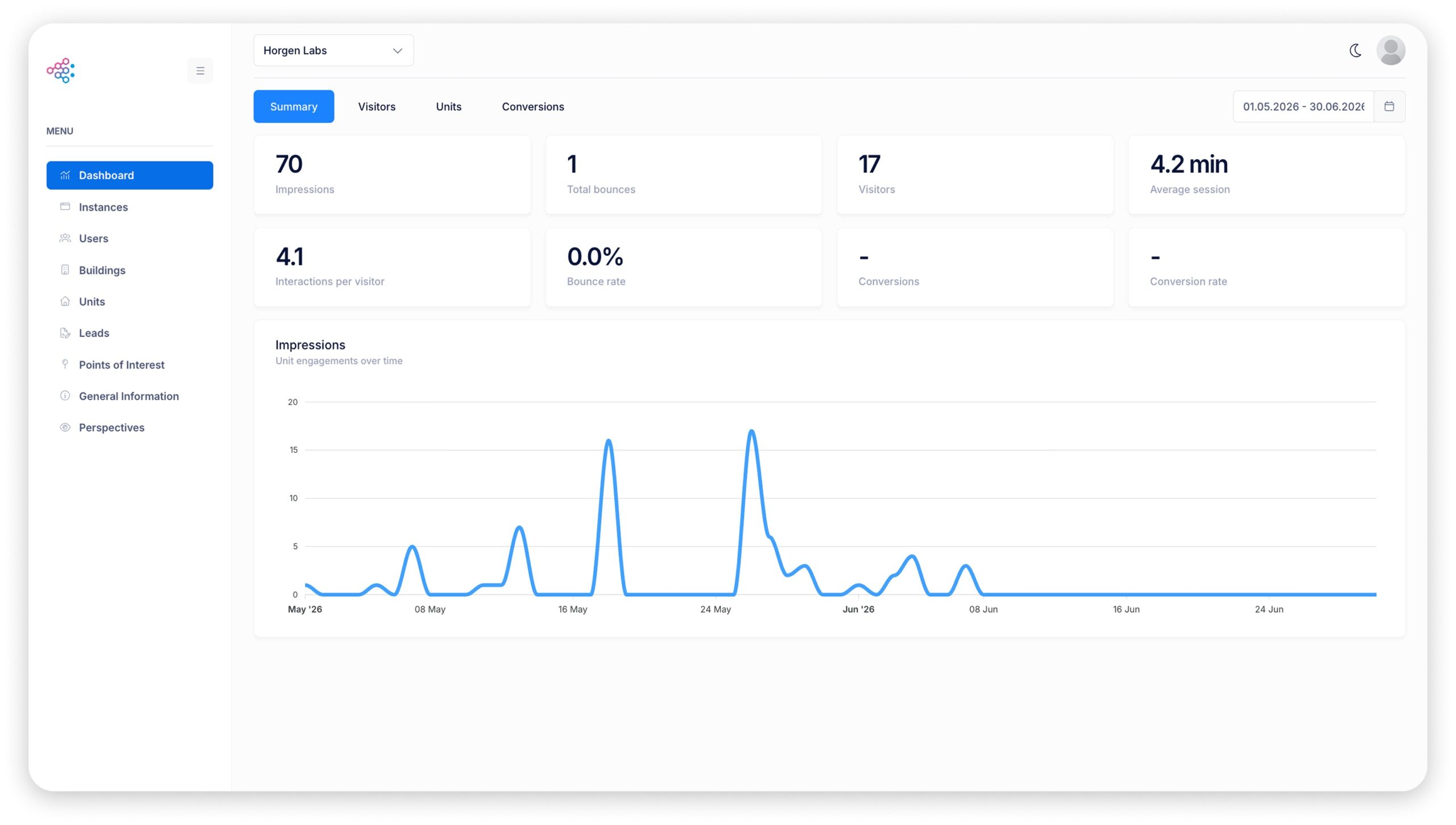
The Demand Radar complements traditional market data (e.g., from Wüest Partner) with real demand data per unit.

How long do prospective tenants engage with a unit?
Longer dwell time = higher interest.

Which units are viewed most often?
High click numbers indicate preferences.

How many contact forms are submitted per unit?
More leads = a stronger position.

The ratio of visitors to serious prospects — an indicator of willingness to pay.

Demand-based optimization maximizes revenue per unit without overpricing.

Early market entry without prices generates leads early on and shortens the marketing period.

Set rents based on real market reactions, not estimates.

Gradual price convergence prevents overpricing and reduces vacancy.
Discover our successfully completed projects.